Why Most Cloud Migrations Fail Before the First Deployment

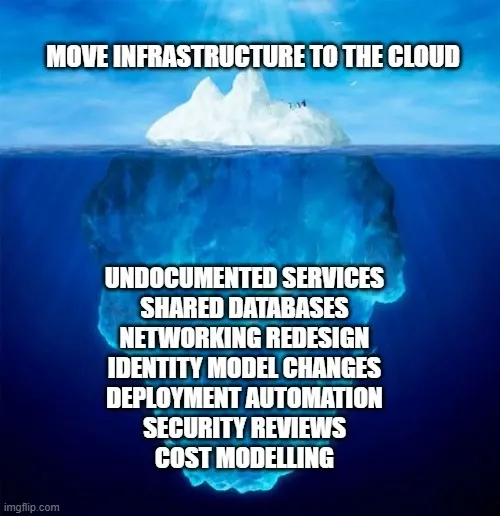
Cloud migration often starts with confidence. The plan sounds simple: move existing systems to the cloud, reduce infrastructure overhead, gain scalability, and modernise the stack. In presentations and strategy documents, the path usually looks straightforward.
Reality tends to look different.
Many cloud migration projects struggle long before the first production deployment happens. Teams spend months preparing environments, rewriting infrastructure, and untangling dependencies. Budgets grow. Timelines slip. The migration stalls.
The problem usually isn’t the cloud platform itself. It’s the assumptions carried over from the old architecture.
The “Lift and Shift” Illusion
One of the most common starting points is the idea that existing systems can simply be moved to the cloud with minimal changes. In theory, this approach — often called lift and shift — reduces migration effort.
In practice, it often exposes deeper issues.
Applications designed for static infrastructure frequently rely on:
-
fixed IP addresses
-
local file storage
-
tightly coupled services
-
manual deployment processes
Cloud environments work differently. Infrastructure becomes dynamic. Instances scale up and down. Storage is externalised. Network boundaries change.
When these assumptions collide with cloud architecture, teams realise the system isn’t ready to move as easily as expected.
Migration stops being a relocation project. It becomes an architecture redesign.
Hidden Dependency Sprawl
Legacy systems rarely live alone. Over time, they accumulate connections to other services, databases, scheduled jobs, and internal tools.
Some dependencies are documented. Many are not.
During migration preparation, teams often discover that an application depends on:
-
internal authentication services
-
shared databases used by multiple systems
-
file shares accessed by several teams
-
hard-coded integrations with third-party APIs
These hidden links make migration risky. Moving one component without the others can break workflows across the organisation.
Before anything moves to the cloud, teams must map the real dependency graph. That exercise alone can take months.
Networking Surprises
Networking is one of the least glamorous parts of cloud migration, but it’s often where projects slow down the most.
Enterprise networks tend to have years of accumulated rules, VPN connections, firewall exceptions, and routing configurations. Recreating that structure in the cloud requires careful planning.
Questions start appearing quickly:
-
How will internal services communicate with cloud resources?
-
What needs private connectivity versus public endpoints?
-
How should traffic be routed between environments?
Without clear answers, migrations stall while teams rebuild network architecture from scratch.
Identity and Access Complexity
Identity management is another common stumbling block.
Existing systems often rely on internal directories, legacy authentication methods, or manual permission setups. Cloud platforms introduce a different model built around identity roles, policy-based access, and service accounts.
If identity architecture isn’t designed early, migration plans run into security roadblocks.
Suddenly, teams must rethink:
-
how services authenticate with each other
-
how developers access infrastructure
-
how permissions are managed across environments
Security teams usually get involved at this stage, which adds necessary review but also slows timelines.
Cost Shock During Planning
The cloud is often associated with cost savings. That assumption doesn’t always hold up during migration planning.
When teams model their workloads in the cloud, they sometimes discover that a direct infrastructure translation becomes expensive. Systems designed for always-running servers may require significant refactoring to benefit from cloud elasticity.
Examples include:
-
databases sized for peak capacity
-
batch jobs running continuously
-
inefficient storage patterns
Without architectural adjustments, the projected cloud bill can exceed existing infrastructure costs.
That realisation forces teams to pause and rethink the design before continuing.
Operational Model Changes
Moving systems to the cloud also changes how software is operated.
Infrastructure becomes programmable. Environments are often managed through automation and infrastructure-as-code tools. Deployment pipelines become central to daily operations.
For organisations used to manual infrastructure management, this shift requires new skills and workflows.
Developers, operations teams, and security engineers must adapt to a more automated environment. Until those practices are in place, cloud systems remain difficult to manage safely.
Migration Is an Architecture Project
Successful cloud adoption rarely happens through simple relocation. It requires understanding how existing systems behave, where their dependencies live, and how they should evolve to fit a dynamic infrastructure model.
Organisations that treat migration as an architecture transformation tend to move faster in the long run. They invest time upfront in redesigning networking, identity, and deployment processes instead of trying to force legacy assumptions into cloud environments.
The cloud itself isn’t the obstacle.
The real challenge is uncovering everything the current system depends on — and deciding which parts should move, which should change, and which might be better left behind.

Go Cloud Native, Go Big
Revolutionise your organisation by becoming a born-again cloud enterprise. Embrace the cloud and lead the future!
Read more:
How to Plan a Cloud Migration (Without Losing Your Mind)
You know you need to move to the cloud. But you're terrified: What if we lose data? How long will this take? What if it ...
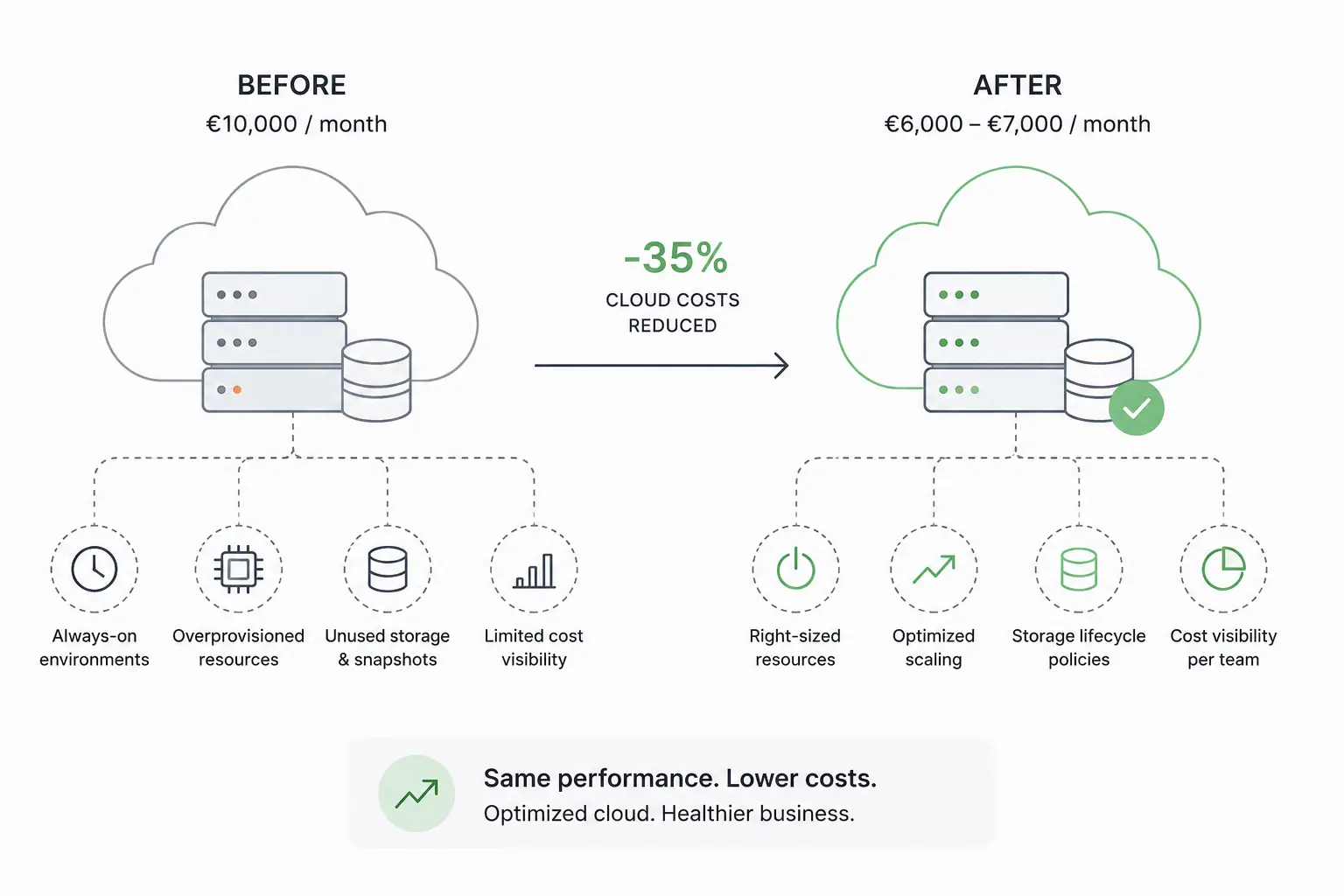
Cloud Cost Optimisation: How We Helped a SaaS Company Reduce Cloud Spend by 35%
A small SaaS company with around 50 employees approached us with a concern that had begun to surface in budget discussio...

Cloud Observability vs. Cloud Monitoring
The difference between monitoring and observability only really shows up when something goes wrong, and the usual tools ...

What Happens When a Cloud Region Goes Down
Most teams build their systems expecting small failures. A container crashes. A node disappears. Maybe an availab...

Cloud Security Basics Developers Often Ignore
Cloud security is often framed as a shared responsibility. In practice, that usually translates to something like: “the ...
Why Most Cloud Migrations Fail Before the First Deployment
Cloud migration often starts with confidence. The plan sounds simple: move existing systems to the cloud, reduce infrast...