January Cloud Bill Review: Identifying Waste and Improving Cost Management

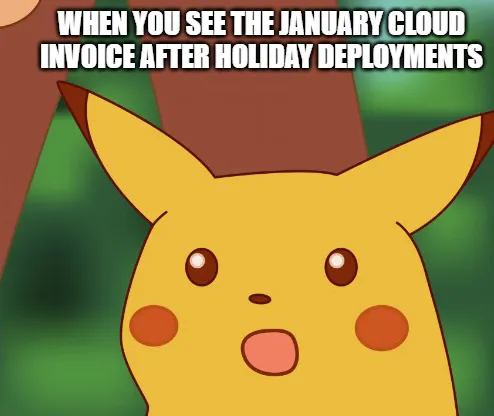
January is when many teams open their cloud invoice, blink twice, and wonder what exactly happened in December.
Holiday traffic spikes, paused projects, temporary experiments, and “we’ll clean this up later” resources all tend to collide at the end of the year. The result? A cloud bill that feels higher than expected — and harder to explain.
The good news: January is the perfect time to regain control. With a structured review, you can quickly identify waste, lock in savings, and set better cost discipline for the year ahead.
Why January Cloud Bills Are Often Higher
End-of-year activity creates a perfect storm for cloud overspending. Marketing campaigns and seasonal traffic increase usage, teams spin up temporary environments to meet deadlines, and experiments run unattended while everyone is offline. At the same time, cost reviews are often postponed in December — budgets are reset in January, but the resources don’t.
What looks like a sudden spike is usually a collection of small, forgotten decisions.
Forgotten and Idle Resources to Hunt Down
The fastest savings usually come from resources nobody is actively using anymore. January is the moment to look for compute instances that were created “just for testing,” development environments left running over the holidays, or databases that were duplicated and never deleted.
Storage is another silent cost driver. Old snapshots, unused volumes, and log archives can quietly grow for months. Many teams are surprised to find they’re paying more for storage than compute — simply because nothing was ever cleaned up.
Seasonal Traffic and Scaling After the Peak
Auto-scaling works both ways — but only if it’s configured correctly. After holiday traffic subsides, some systems remain over-provisioned, running at peak capacity while serving normal traffic.
Review load balancers, container clusters, and serverless concurrency limits. Right-sizing these resources to match current demand can immediately reduce costs without impacting performance.
Reserved Capacity and Commitments Check
January is also the right time to review long-term commitments like Reserved Instances, Savings Plans, or committed-use discounts. Some may be underutilised, while others may no longer align with how your workloads actually run.
If your architecture changed during the year — for example, moving workloads to containers or serverless — older commitments might be costing more than they save. Aligning commitments with real usage is key to predictable spending.
Cost Visibility: Who Owns the Bill?
Many cloud bills grow because no one truly owns them. January is a good moment to recheck tagging policies, cost allocation reports, and budget alerts.
If teams can’t easily see what they’re spending, costs tend to drift. Clear ownership, meaningful tags, and simple dashboards help turn cloud cost management from a finance problem into a shared engineering responsibility.
Quick Wins to Implement This Month
You don’t need a full FinOps program to see results. A short January checklist often delivers immediate value:
-
Shut down or schedule non-production environments outside working hours
-
Delete unused snapshots, volumes, and stale storage
-
Right-size over-provisioned compute resources
-
Set or tighten budget alerts before the next spike
-
Review auto-scaling limits now that peak traffic is over
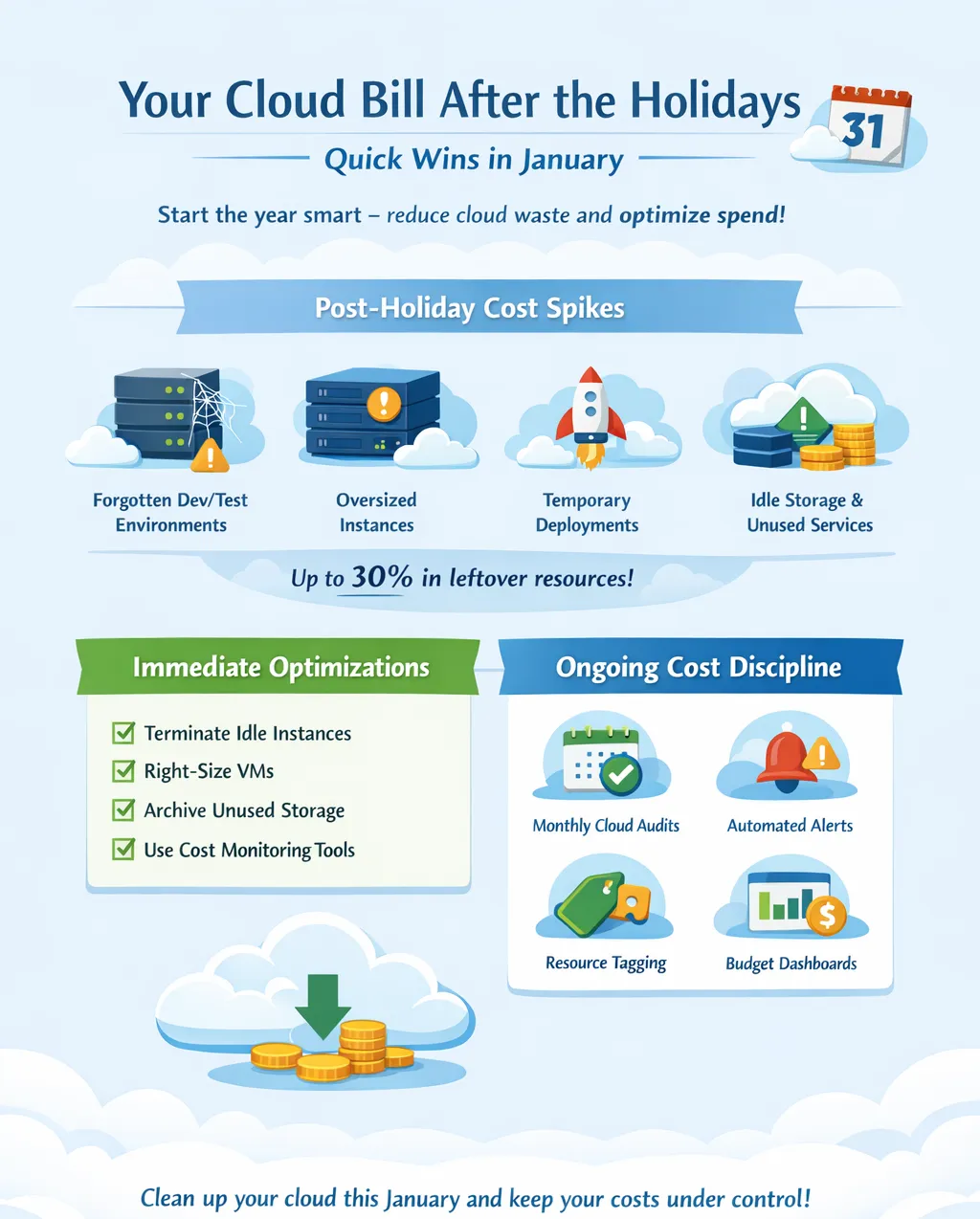
These changes take hours, not weeks — and they often pay for themselves within the first billing cycle.
Turning January Cleanup into a Habit
The biggest mistake is treating January as a one-off cleanup. The most cost-efficient teams use this moment to set recurring reviews, automate cleanup policies, and make cost awareness part of regular delivery.
When cloud cost management becomes routine, bills stop being surprises — and start becoming another controllable part of your engineering system.
Final Thoughts
A higher cloud bill in January doesn’t mean you failed — it usually means your systems were busy. What matters is what you do next.
A focused review now can reduce waste, improve visibility, and set a healthier foundation for the year ahead. Cloud costs aren’t just about saving money — they’re about building systems that scale efficiently, transparently, and intentionally.
If you start January right, the rest of the year gets a lot easier.

Go Cloud Native, Go Big
Revolutionise your organisation by becoming a born-again cloud enterprise. Embrace the cloud and lead the future!
Read more:
How to Plan a Cloud Migration (Without Losing Your Mind)
You know you need to move to the cloud. But you're terrified: What if we lose data? How long will this take? What if it ...
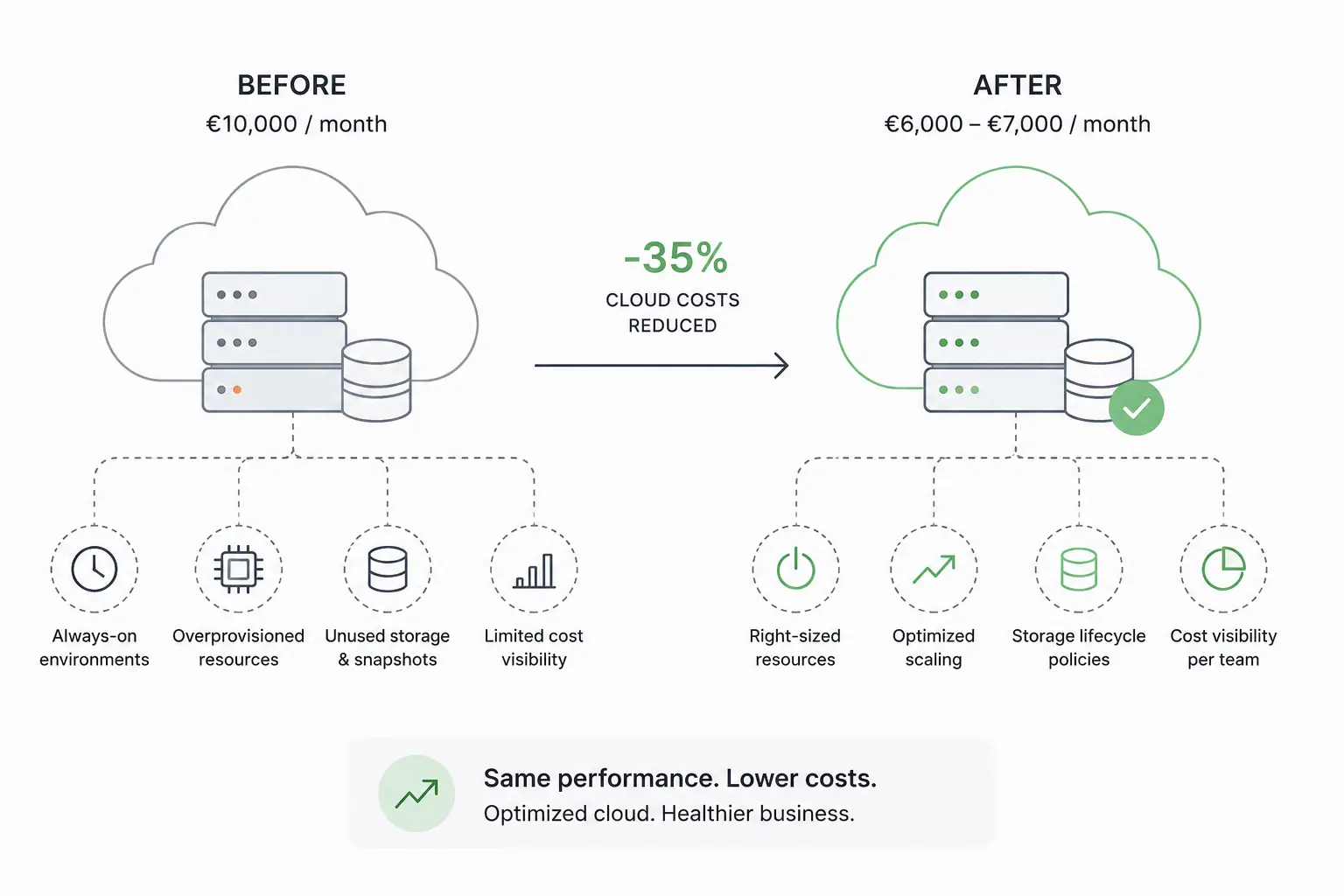
Cloud Cost Optimisation: How We Helped a SaaS Company Reduce Cloud Spend by 35%
A small SaaS company with around 50 employees approached us with a concern that had begun to surface in budget discussio...

Cloud Observability vs. Cloud Monitoring
The difference between monitoring and observability only really shows up when something goes wrong, and the usual tools ...

What Happens When a Cloud Region Goes Down
Most teams build their systems expecting small failures. A container crashes. A node disappears. Maybe an availab...

Cloud Security Basics Developers Often Ignore
Cloud security is often framed as a shared responsibility. In practice, that usually translates to something like: “the ...
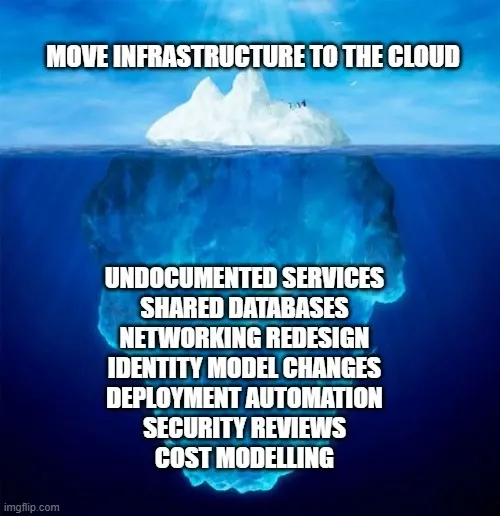
Why Most Cloud Migrations Fail Before the First Deployment
Cloud migration often starts with confidence. The plan sounds simple: move existing systems to the cloud, reduce infrast...